Introduction
Event restroom planning can make or break guest comfort—especially at weddings, festivals, corporate gatherings, and long-duration builds where people will be on-site for hours. When you’re choosing between standard portable units and premium options, the decision usually narrows to two high-end categories: event restrooms and luxury trailers. Event Restrooms vs Luxury Trailers isn’t just a style question—it affects hygiene, accessibility, queue times, site logistics, and overall guest experience. For many organizers researching event porta potty rental options, understanding these differences early prevents costly mistakes later.
In this guide, you’ll learn what each option is, how it works, what it includes, and where each one shines. We’ll break down practical use cases, the real trade-offs (cost, utilities, capacity, maintenance), and common misconceptions that lead to unhappy guests or avoidable surprises on event day. If you’re coordinating an event, managing a venue, or supporting on-site operations, you’ll walk away with a clear framework to choose the right restroom solution confidently.
Direct Answer / Definition
Event restrooms are upgraded portable restroom units (often standalone cabins) designed for nicer aesthetics, better ventilation, and improved hygiene compared to basic porta potties, while luxury trailers are towable restroom suites with multiple stalls, sinks, lighting, climate control, and a more “indoor bathroom” experience—often requiring more space, access, and utilities.
In most cases:
- Choose event restrooms when you want a noticeable upgrade without the footprint, towing access, and utility complexity of a trailer.
- Choose luxury trailers when you want the highest guest comfort, a premium look and feel, and better throughput—assuming your site can support delivery, placement, and servicing. This is why many planners specifically look into luxury restroom trailers for formal or long-duration events.
In-Depth Breakdown
What “Event Restrooms” Typically Are
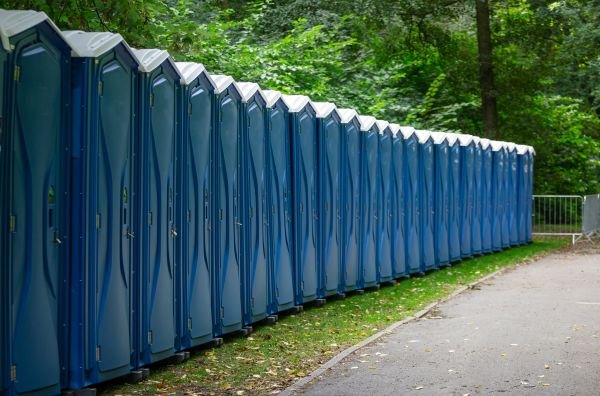
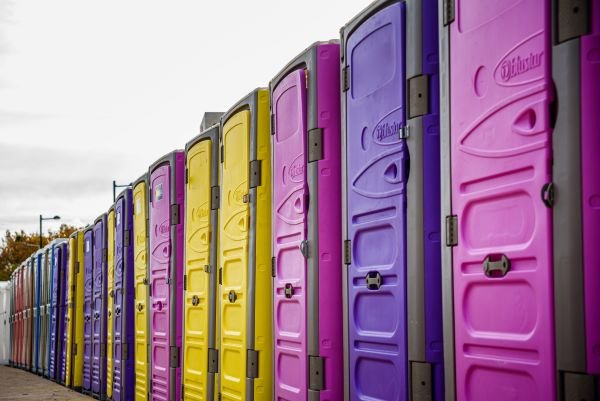
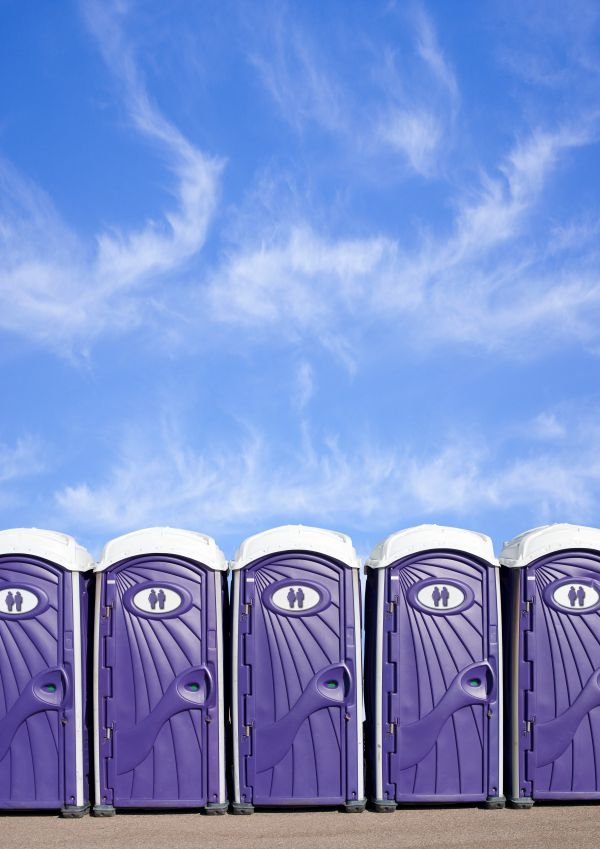
Event restrooms are portable units positioned as a step above standard single-stall porta-potties. Depending on the rental market, “event restroom” may refer to:
- Premium single-stall units (more interior space, better ventilation, nicer exterior)
- Flushing portable restrooms (foot-pump or recirculating flush systems)
- Handwash stations or integrated sinks (sometimes foot-pump operated)
- Enhanced interior features like mirrors, coat hooks, shelves, improved lighting (battery/solar), and deodorizing systems
How they work (high level):
- Waste is stored in an internal holding tank (or directed to an external tank in some setups).
- Units are delivered, positioned, and stabilized.
- Servicing involves pumping out waste, replenishing water/chemicals, and cleaning surfaces.
Key components:
- Toilet and holding tank (or flush system + tank)
- Vent stack and airflow system
- Door latch and occupancy indicator (common in higher-end units)
- Hand hygiene option: sanitizer dispenser, external handwash station, or integrated sink
- Lighting (battery/solar) and interior fittings
Common variations:
- Standard premium cabin (simple upgrade)
- Flushing event unit (better comfort and odour control)
- Accessible event restroom (wider door, turning space, grab rails)
- Fresh-water handwash station (separate unit, multi-user)
What “Luxury Trailers” Typically Are
Luxury restroom trailers are towable, multi-stall suites that mimic an indoor restroom experience. They’re designed for higher expectations and larger guest counts.
How they work (high level):
- The trailer is towed to the site and leveled with stabilizers.
- Inside are multiple stalls (often separated by gendered entrances or layouts), sinks with running water, soap dispensers, mirrors, and lighting.
- Waste typically flows into onboard holding tanks or sometimes to an external tank.
- Many trailers require power to run lighting, pumps, and HVAC (air conditioning/heating). Some can operate with generators.
Key components:
- Multiple toilet stalls (often flush toilets)
- Multi-sink vanity area with running water
- Interior lighting, mirrors, and paper towel dispensers
- Climate control (HVAC) in many models
- Freshwater and wastewater tanks (onboard)
- Steps/handrails and entry doors
- Power connection (or generator support)
Common variations:
- 2-stall / 3-stall / 5-stall / 8+ stall trailers
- Executive or VIP trailers with higher-end finishes
- ADA-accessible trailers (ramp access and compliant interior layout)
- Combo units (e.g., men’s urinals + women’s stalls) for throughput optimization
The Practical Differences That Matter Most
1) Guest Experience
- Event restrooms: clearly nicer than basic units, but still “portable.” Comfort varies by model.
- Luxury trailers: closest to an indoor restroom—better lighting, airflow, temperature control, and often a cleaner feel throughout the event.
2) Capacity and Throughput
- Event restrooms: typically one user at a time per unit; you scale by adding more units.
- Luxury trailers: multiple stalls + sinks increase throughput and reduce lines, especially during peak moments (speech breaks, meal transitions, intermission).
3) Site Logistics and Access
- Event restrooms: easier placement on uneven sites; less delivery complexity; can fit in tighter spaces.
- Luxury trailers: require towing access, turning space, stable ground, and safe step/ramp placement; more sensitive to site constraints.
4) Utilities and Operations
- Event restrooms: may not need external power; handwash can be standalone; simpler servicing.
- Luxury trailers: often need power for pumps and HVAC; may benefit from a dedicated water supply or more frequent servicing depending on guest count.
5) Aesthetics and Brand Fit
- Event restrooms: good for semi-formal events, community festivals, and “nice but practical” expectations.
- Luxury trailers: best for weddings, corporate VIP events, premium venues, and any scenario where restrooms are part of the perceived quality.
Real-World Examples & Use Cases
Weddings (Outdoor, Vineyard, Property Events)
- Event restrooms work well for smaller weddings or sites with limited vehicle access. , including private properties and regional venues such as those commonly seen around Dayton, OH
- Luxury trailers are ideal when guests are dressed formally, the event runs long, and comfort is a priority—especially if the venue doesn’t have indoor facilities.
Festivals, Markets, and Public Events
- Event restrooms are often the workhorse choice because you can distribute units across large areas, reduce walking distance, and place accessible units where needed.
- Luxury trailers shine in VIP zones, backstage areas, or sponsor lounges where a premium experience matters.
Corporate Events and Brand Activations
- Luxury trailers align with brand perception and executive comfort, particularly for client-facing events.
- Event restrooms may be used for staff or general admission areas where budgets and footprint matter.
Construction Sites and Long-Duration Projects
- Event restrooms can be appropriate for short-term high-visibility projects, site offices, or client visits.
- Luxury trailers are sometimes used for executive site visits, high-profile builds, or film-style “basecamp” operations, but cost and power needs are key considerations. —especially for projects across growing markets like Huntsville, AL.
Film, TV, and Production Sets
- Luxury trailers are common because they support higher comfort for talent and crew, and can handle sustained use with better interior amenities.
- Event restrooms may be used as supplementary units in remote set locations.
Benefits, Pros & Cons
Event Restrooms
Pros
- Easier to deliver and place in tight or uneven locations
- Scales flexibly: add more units to reduce queues
- Often lower cost than a trailer suite
- Simpler setup (frequently no external power required)
Cons
- Single-stall throughput can mean lines during peak moments
- Guest experience varies widely by unit quality and servicing frequency
- Handwashing may be separate or limited, depending on the setup
- Less “indoor bathroom” feel compared to trailers
Luxury Trailers
Pros
- Highest comfort: lighting, sinks, mirrors, and often climate control
- Multiple stalls and sinks reduce queues and improve flow
- Strong visual impression—fits premium events and VIP expectations
- Better for long-duration events where comfort matters more over time
Cons
- Higher cost and more complex logistics (towing, placement, leveling)
- May require power (and sometimes a generator strategy)
- Needs adequate site access and safe entry/egress conditions
- Servicing can be more involved depending on guest volume and event length
Common Mistakes & Misconceptions
Mistake 1: Underestimating Peak Usage
People don’t use restrooms evenly across an event. They surge during predictable moments: arrivals, before food, after speeches, intermissions, and just before departure. If you plan only for average usage, you’ll get lines.
Fix: plan capacity for peak moments, not just total headcount.
Mistake 2: Ignoring Accessibility Requirements
Accessible restroom options aren’t optional in many settings, and even when not legally mandated, they’re part of basic event planning and guest care.
Fix: ensure there’s an accessible unit/trailer option placed on a stable route with appropriate lighting and signage.
Mistake 3: Assuming “Luxury Trailer” Always Means No Smells or No Servicing
Even premium trailers need proper waste management and cleaning. High usage without servicing can degrade any restroom experience.
Fix: align service frequency with guest count, duration, and weather (heat increases odour risk).
Mistake 4: Choosing Based on Looks Alone
A trailer can look incredible but be a poor fit if your site can’t support delivery, power, or safe access. Likewise, premium event restrooms can outperform a trailer in difficult terrain or dispersed venues.
Fix: decide based on site logistics first, then guest experience.
Mistake 5: Forgetting Hand Hygiene
Restrooms without adequate handwashing (soap + water or high-quality sanitizer) create complaints and hygiene concerns.
Fix: treat hand hygiene as a non-negotiable part of the restroom package.
FAQs
Costs vary widely by region, season, duration, and service level. In general, event restrooms are typically less expensive per unit, while luxury trailers cost more but include multiple stalls and premium amenities. The true cost should include delivery, servicing, consumables, and any generator/power needs.
Start with your guest count, event duration, and peak-use moments. If you expect high peaks (weddings, festivals, intermissions), trailers can improve throughput. If your site is spread out or access is limited, multiple event restrooms placed strategically can reduce lines and walking distance.
Many luxury trailers need power for lighting, pumps, and HVAC. Some can run on generators. Water may be onboard (tank-fed) or supplemented by a supply depending on the model and rental package. Always confirm utility requirements and backup plans.
That depends on tank capacity, usage volume, and temperature. Higher guest counts and longer durations increase the need for servicing. For all-day events, especially in warm weather, plan for mid-event servicing if usage is heavy.
Requirements depend on your location, venue rules, and event type. Many jurisdictions and venues have guidelines around minimum restroom counts, sanitation, and accessible facilities. Treat compliance and accessibility as a baseline and confirm local rules early.
If your venue is premium, guests are dressed up, and the event runs long, luxury trailers often match expectations best. If access is tight, the site is uneven, or the event is smaller, high-quality event restrooms can still deliver an excellent experience—especially with strong servicing and handwashing.
Site logistics. The best restroom option is the one that can be delivered, placed safely, and serviced reliably—without creating bottlenecks, trip hazards, or long walks for guests.
Conclusion
Event restrooms and luxury trailers both solve the same problem—providing clean, reliable facilities when permanent bathrooms aren’t available—but they do it at different comfort and logistics levels. Event restrooms offer flexible placement and simpler setup with a meaningful upgrade over basic portable units. Luxury trailers deliver the most premium experience with multiple stalls, sinks, and often climate control, but they demand more site access and operational planning.
If you want a confident decision, prioritize site constraints and peak throughput first, then match the restroom experience to your audience and event style. If you’d like, you can share your guest count, event duration, and site access (flat ground, towing access, power availability), and I’ll recommend a practical configuration without overbuilding or underplanning.